The story
A hundred and thirty years on this shore
Most of what follows we learned from the people who were here before us, from paper in a drawer, and from things that are still in the ground if you know where to look.
-
1897
Alfred Dixon tries to farm the rock
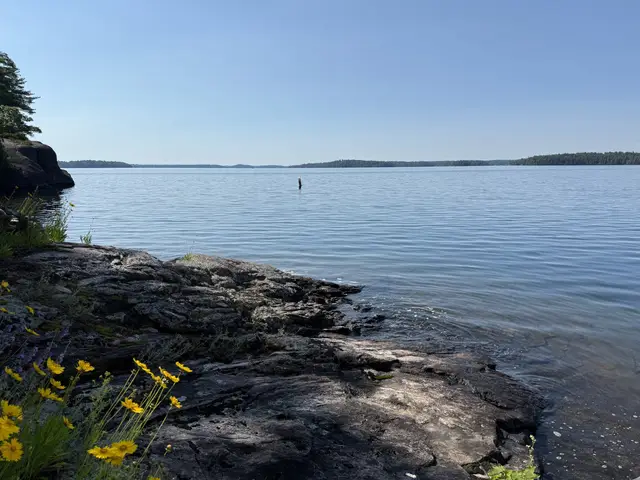
Alfred Dixon was granted 160 acres along this Lake Joseph shoreline under the English Free Grants and Homestead Act, and he set about farming it. Anyone who has stood on the Precambrian Shield will understand why we now find the farming attempts rather funny.
The Dixons and then the Hamers sold parcels along the shore and built up the area — a small hotel, a rough marina, a church house. The bay beyond our point is still called Hamer Bay.
-
1928
Dr. Wardwell, the greenhouse and the cherry tomato
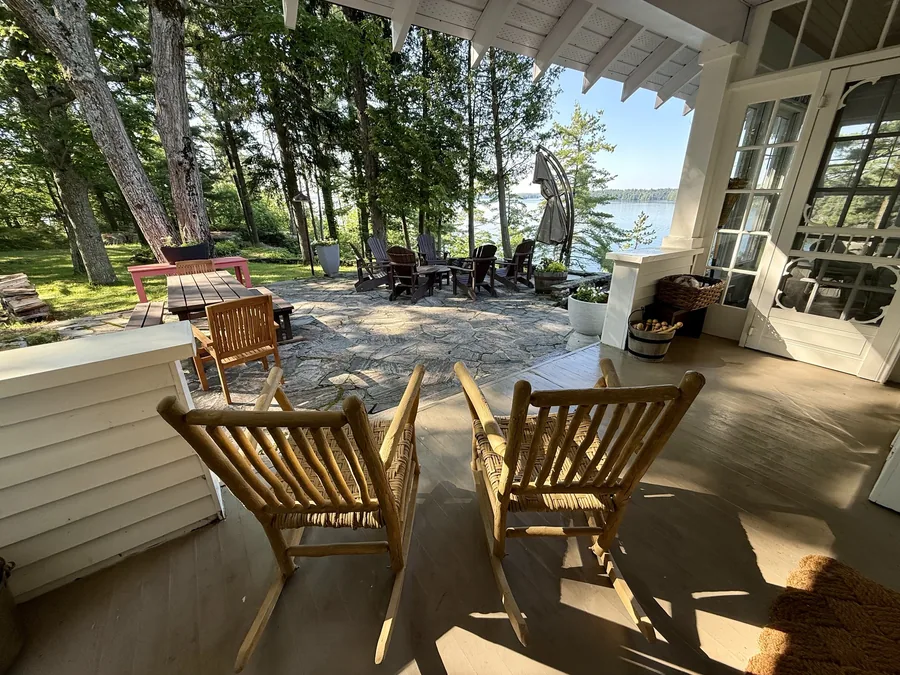
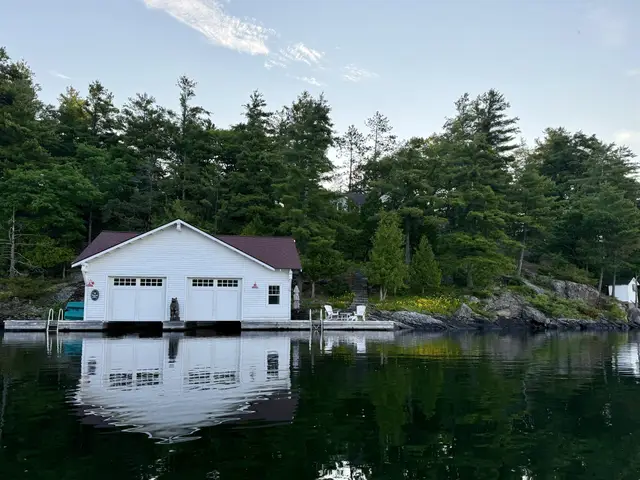
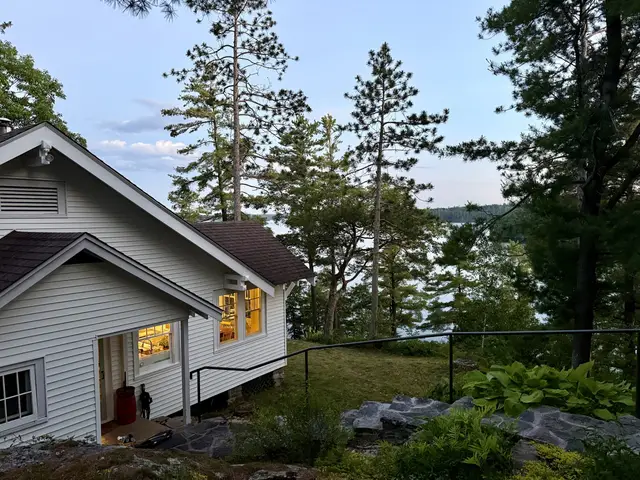
An American plant pathologist, Dr. Walter Wardwell, who worked often with the University of Michigan, bought about thirty acres of the Dixon grant. He began building around 1930 — a main lodge, a two-storey boathouse and a separate cook house — and the main lodge was finished in 1933.
He was worried about fire, so he put the kitchen and staff quarters a full hundred yards from where people slept, and ran a small incline railway between the two. Parts of that railway are still in the ground.
He also built a water tower and a year-round greenhouse with an ingenious heating and watering system, and kept experimental gardens here. We are told he developed the double petunia and the cherry tomato on this land. The experimental station is long abandoned and the tower is gone, but some of its beams and steel were worked into the buildings that stand today.
-
1945
The Mowers fly up from Toronto
A timber family from West Virginia, the Mowers, kept a private summer fishing camp here for their friends and family. They ran lumber mills in Mowertown and Cass, West Virginia, and they flew up to the lake by seaplane from Toronto.
The old slide from their landing site is still visible from our shore. Their mills closed in 1955 as the local forest gave out, and their towns emptied. They used this place until the same year.
-
1965
The name arrives
The land sat quiet for about a decade, and then in 1965 it was bought out of the Mower estate and divided between two families who were friends. One took the old cook house and boathouse; our side took the old Wardwell lodge.
Sterling Point takes its name from our grandfather's international silver business. His shop worked on the Stanley Cup, and he had a hand in making it the trophy it is today — the tiered ring system that carries the name of every winning team is his design. Not a bad thing to be named after.
-
1997
Our parents take over Sterling Point
Our parents took over Sterling Point, and have loved it ever since. Our mother grew up here, which is the reason any of this is still in the family at all.
The furniture, the textiles and the artwork in the cottage came down through those generations. Most of it has a story, and most of the stories are better than the objects.
-
2023
A film crew found us
Megan Park's My Old Ass was filmed here, and for a while the place was full of trucks and cable and very patient people. We were sort of proud about it, and the Point came through unbothered.
-
Today
Still a family place
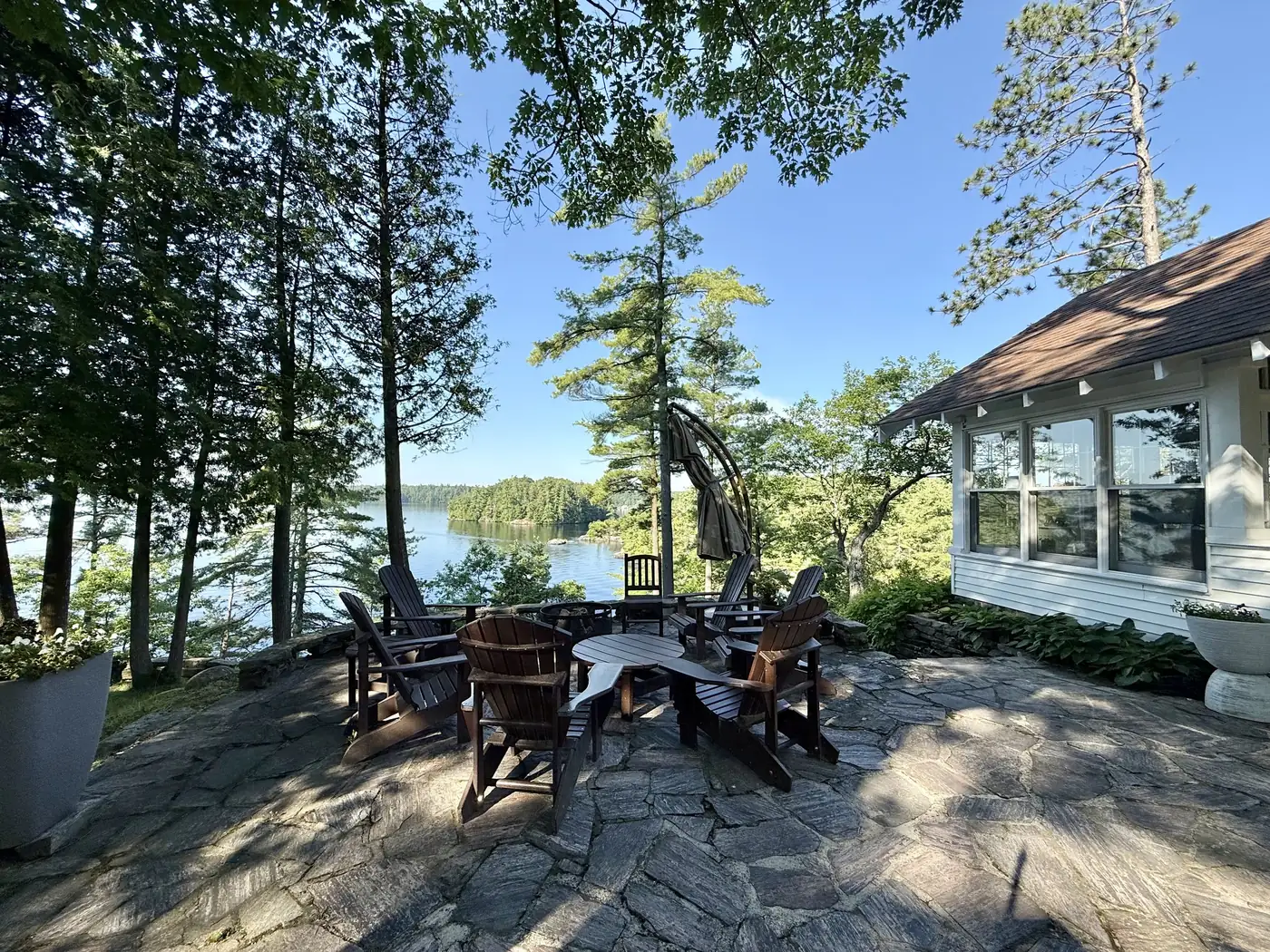
Four generations in, it is still what it has always been: the place we come to unplug and get back to what actually matters. Friends around a long table, food that takes all afternoon, a fire once it cools off, and as much time on the boat as the weather will give us.